High Quality Green Tea Extract for Beverage Industry: Demeterherb’s Functional Solutions
XI'AN, SHAANXI, CHINA, August 12, 2026 /EINPresswire.com/ -- When a regional beverage brand sits down to evaluate a
Press Release Disclaimer: This is a press release distributed through the XPR Media network. It has not been independently verified by our newsroom.
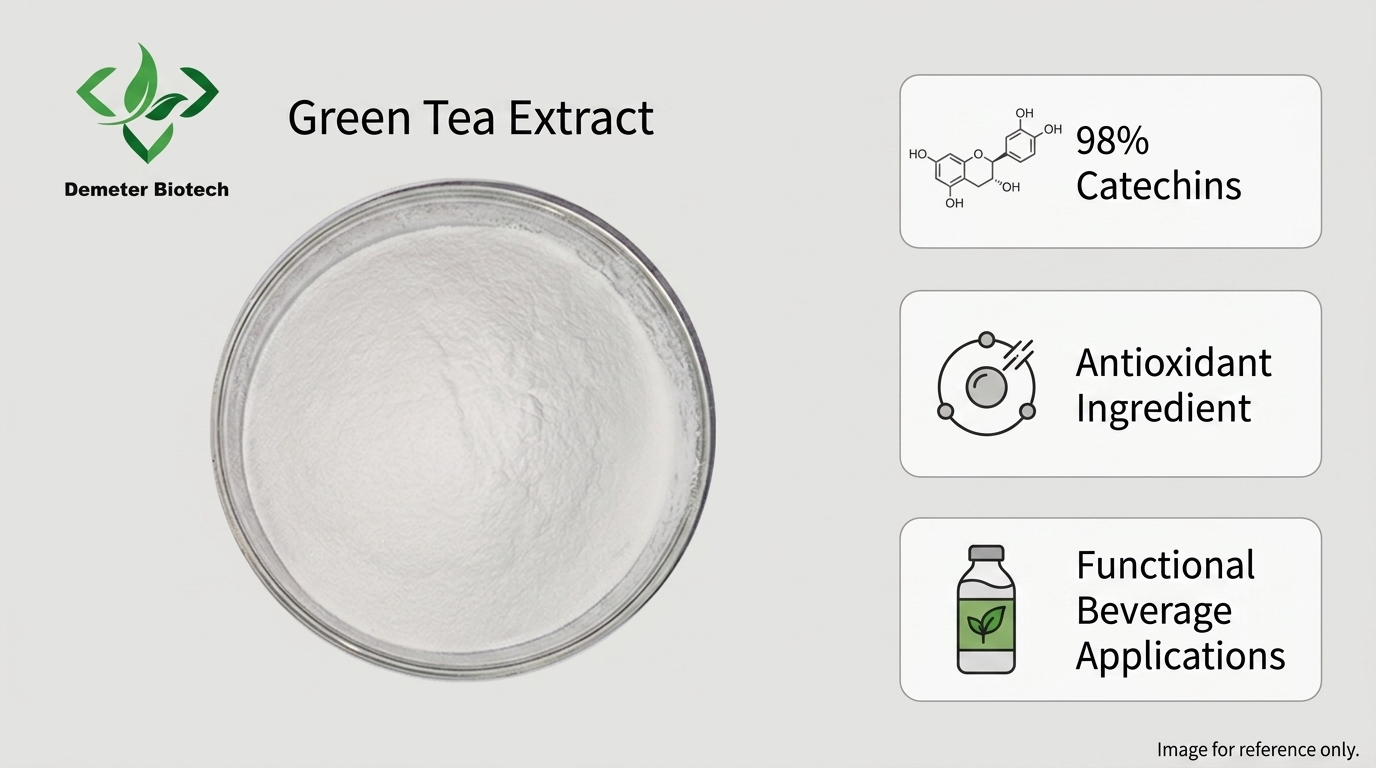

XI’AN, SHAANXI, CHINA, August 12, 2026 /EINPresswire.com/ — When a regional beverage brand sits down to evaluate a plant ingredient, the conversation rarely turns on a single marketing phrase. It turns on whether the specification, the application scope, and the supporting documents line up into something a formulator can actually use. That practical mindset positions Demeterherb‘s Green Tea Extract as a defined, document-backed option for the beverage industry. Demeterherb’s beverage-oriented range includes conventional green tea extracts with polyphenols 40%-98%, catechins 20%-75%, and EGCG 12%-45%. Debittered, lower-caffeine grades cover polyphenols 30%-98%, catechins 15%-80%, and EGCG 5%-45%. The portfolio also includes EGCG 50%-98%, L-Theanine 20%-98%, tea theaflavins 20%-40%, organic tea extract, and water-soluble instant tea.
Functional Beverages: A Commercially Relevant Sourcing Category
Green tea extract becomes commercially useful to beverage developers when its specifications, application fit, and supporting documents can be reviewed together. Demeterherb’s range gives formulators defined options across polyphenols, catechins, EGCG, lower-caffeine grades, organic tea extract, and water-soluble instant tea, creating a practical basis for formulation trials and supply planning. For procurement teams, this structure also makes sample requests easier to define because the target grade and intended beverage format can be stated before technical follow-up.
Regional beverage brands, distributors, and procurement teams need ingredients they can discuss in concrete terms and then evaluate. Demeterherb’s Green Tea Extract offering is organized around that expectation. Rather than a broad promise, the company provides a clear ingredient identity and documented specification paths, so buyers can weigh green tea extract for the beverage industry against a checkable basis. That keeps the sourcing discussion focused on formulation fit, traceability, and commercial planning.
Green Tea Extract for Beverage Formulation: Multiple Defined Specification Paths
Demeterherb’s green tea extract range is built around several defined specification paths. Conventional grades cover polyphenols 40%-98%, catechins 20%-75%, and epigallocatechin gallate (EGCG) 12%-45%. Debittered, lower-caffeine grades cover polyphenols 30%-98%, catechins 15%-80%, and EGCG 5%-45%. Separate options include EGCG 50%-98%, L-Theanine 20%-98%, tea theaflavins 20%-40%, organic tea extract, and water-soluble instant tea. This structure lets a beverage developer choose the series that matches flavor, caffeine, solubility, and composition requirements.
Functional expression in a finished drink should rest on the exact series selected. Conventional and debittered lower-caffeine grades use different polyphenol, catechin, and EGCG ranges, while standalone EGCG, L-Theanine, and tea theaflavin grades should be treated as separate specifications. What a brand claims on the label remains its own decision, grounded in finished-product testing and target-market rules. Keeping raw-material specifications and end-product claims separate makes the ingredient conversation credible.
Functional Positioning Without Overclaiming Beverage Performance
The value of green tea extract in a functional beverage lies in giving product developers a plant-sourced ingredient with a defined catechin specification. It does not lie in substituting unverified weight-management, disease-prevention, or therapeutic narratives for the brand’s own compliance judgment. Demeterherb keeps the framing deliberately grounded, because an ingredient that oversells at the raw-material stage only creates work later for the customer’s regulatory team.
The product range supports tea and functional drinks through conventional, debittered lower-caffeine, organic, and water-soluble instant tea options. This application positioning gives beverage teams several entry points for flavor, caffeine, solubility, and sourcing requirements. It does not replace a brand’s independent review of target-market regulations, labeling, and final formulation. Used this way, the ingredient supports development work without pretending to guarantee a finished product’s performance.
COA, Shelf-Life and Pack Formats: A Practical Supply Conversation
Commercial usability rests on more than the headline number. It also depends on whether samples, a COA, storage life, and packaging keep pace with an inquiry. Demeterherb’s product page lists a free sample as available, a COA as available, and a 24-month shelf life, so the documentation a buyer needs at the evaluation stage is part of the same offer as the specification.
Packaging adds another practical layer. The page describes a 1 kg aluminum foil bag, a 25 kg carton, and a 25 kg fiber drum, which lets a small trial and a larger production order stay inside one continuous ingredient conversation. None of this presumes an undisclosed minimum order quantity, lead time, or stability conclusion; the point is simply that a formulator sampling the material and a procurement lead planning volume can work from the same published facts. For beverage projects, that continuity also makes the handoff from formulation review to purchasing more concrete. Teams can discuss the published pack formats alongside sample and COA requirements, then confirm any project-specific order volume, delivery schedule, or other commercial terms separately rather than assuming them from the product page.
Demeterherb’s Quality Platform for Global Ingredient Dialogue
Demeterherb, the brand of Xi’an Demeter Biotech Co., Ltd., works across plant extracts, fruit and vegetable powders, and formulation support, serving food, nutrition supplement, beverage, and confectionery applications. Green tea extract sits inside that existing ingredient and formulation framework rather than standing alone as a single product pitch. This wider framework lets the company hold a broader supply conversation with a customer without mixing separate product specifications.
The company’s quality platform is organized around GMP manufacturing standards and company-level certificates including Halal, Kosher, EU Organic, USDA Organic, FDA, and ISO22000. Those certificates describe the manufacturer’s quality-management background. They should not be read as product-specific certification for green tea extract, but they give buyers an initial basis for evaluating how the manufacturer approaches documentation and control. For a procurement team comparing suppliers, that background is often the first filter, applied well before a single specification is discussed in detail. With products reaching more than 50 countries and regions, Demeterherb frames its role as a manufacturing and supply partner rather than a one-off vendor.
A Fact-Based Basis for Beverage Sourcing
Across Demeterherb’s Green Tea Extract offering, the sourcing story stays anchored to defined specifications, beverage applications, and COA and packaging details. Buyers can compare conventional and debittered lower-caffeine series, EGCG, L-Theanine, tea theaflavins, organic tea extract, and water-soluble instant tea side by side. This approach keeps the discussion on facts both sides can audit rather than on claims neither can check. Guided by a customer-focused, quality-oriented philosophy, Demeterherb treats quality management as the foundation for long-term partnership.
Brands and buyers evaluating green tea extract for the beverage industry are invited to visit https://www.demeterherb.com/ to discuss samples, COA, packaging, and specific project requirements.
Xi’an Demeter Biotech Co., Ltd.
Demeterherb
email us here
Visit us on social media:
LinkedIn
Facebook
X
Legal Disclaimer:
EIN Presswire provides this news content “as is” without warranty of any kind. We do not accept any responsibility or liability
for the accuracy, content, images, videos, licenses, completeness, legality, or reliability of the information contained in this
article. If you have any complaints or copyright issues related to this article, kindly contact the author above.

Media gallery